

Maybe it started with a period that arrived two weeks early. Or a sudden wave of heat that climbed up your chest without warning. Perhaps it's the 3 am wake-ups, the irritability that surprises even you or a creeping sense that your memory isn't quite as sharp as it used to be.
Perimenopause symptoms can be easy to dismiss or attribute to stress, a busy lifestyle, or simply getting older. But if something feels different in your body and you're in your late 30s, 40s or early 50s, the signs of perimenopause are worth knowing.
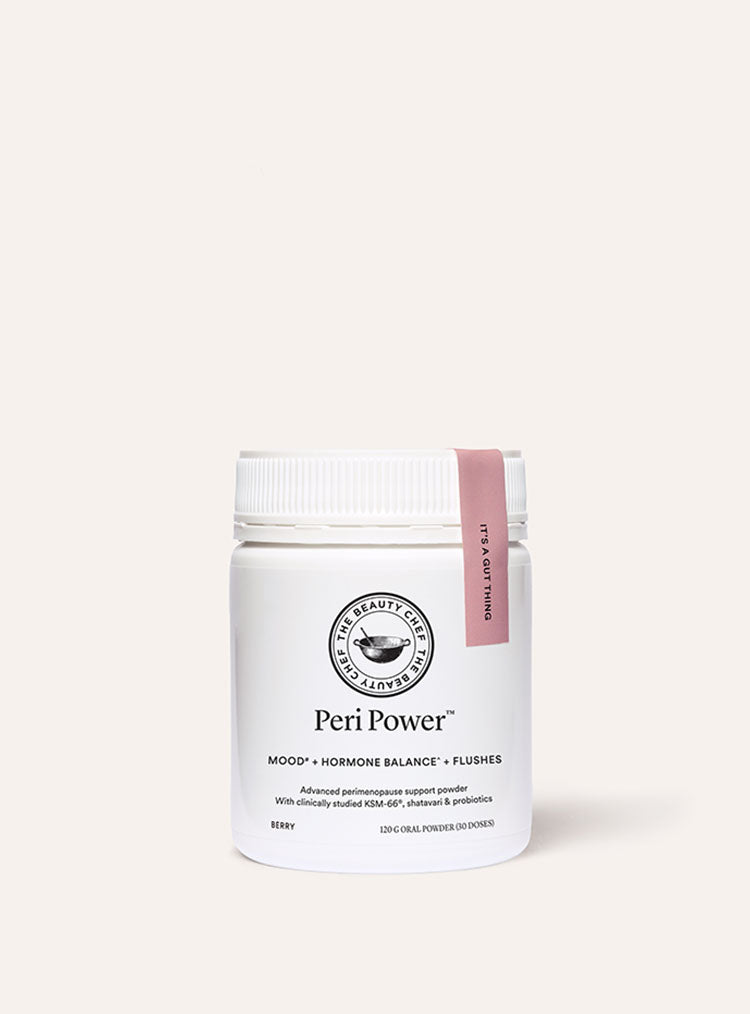
Below, we break down the 10 most common perimenopause symptoms, what's driving them and how to support your body through the transition with our brand new formula, Peri Power™.
10 Perimenopause Symptoms to Know About
These are the perimenopause symptoms most commonly reported—you may experience some, many, or all of them. There's no single pattern.
Symptom 1: Your Periods Have Become Unpredictable
One of the earliest and most telling signs of perimenopause is a shift in your menstrual cycle. Periods may arrive earlier or later than usual, become heavier or lighter, or change in duration. This irregularity happens because fluctuating oestrogen levels affect the reliability of ovulation—cycles can lengthen, shorten, or occasionally be skipped entirely. If you've always been able to set your watch by your cycle, sudden unpredictability is worth noting.
Symptom 2: You’re experiencing hot flushes
That sudden, intense wave of heat, often accompanied by flushing of the face and neck, a rapid heartbeat and sometimes a chill. Hot flushes and perimenopause often go hand in hand, lasting anywhere from a few seconds to several minutes. They're caused by changes in the hypothalamus, the part of the brain that regulates body temperature. When oestrogen levels fluctuate, this temperature regulation can become temporarily disrupted, triggering that familiar rush of heat.
Symptom 3: Night Sweats Are Disturbing Your Sleep
Perimenopause night sweats are essentially hot flushes that occur while you're asleep—and they can be significantly disruptive. Many women describe waking drenched, needing to change their pyjamas, only to feel chilled shortly after. Over time, the repeated sleep interruptions compound into something that affects everything from mood and concentration to immune health—so it's a symptom worth taking seriously.
If you're in need of deeper, more restorative slumber, look no further than Sleep Ritual™—a targeted complex with 525 mg of bioavailable magnesium, passionflower and lemon balm to help relieve restlessness, support muscle relaxation and gently induce sleep.
Symptom 4: Sleep Itself Has Become Challenging
Even without night sweats, sleep disturbance is a hallmark of perimenopause. Difficulty falling asleep, waking in the early hours or simply not feeling rested after a full night are all common. Hormonal fluctuations—particularly declining progesterone, which has a naturally calming effect on the body—are thought to be a key driver of perimenopausal sleep disruption. This kind of tiredness often feels distinct from ordinary fatigue: more persistent and less responsive to rest.
Symptom 5: Your mood feels like a moving target
If you've found yourself more irritable than usual—snapping unexpectedly, feeling inexplicably flat, or swinging between fine and overwhelmed—perimenopause mood changes like these are a well-recognised part of the transition. Oestrogen plays a significant role in serotonin and dopamine regulation, so as levels fluctuate, emotional steadiness can shift. This is not a character flaw or a sign that something is deeply wrong. It's a physiological response to hormonal change—and recognising it as such can itself feel like a relief.
Symptom 6: You're Feeling More Anxious Than Usual
A heightened sense of unease is something many women experience during perimenopause but don't immediately connect to their hormones. The fluctuation of oestrogen can affect the body's stress response, making it harder to feel settled and calm. If this feeling is unfamiliar —if it doesn't match your typical experience of the world—it may well be hormonally driven rather than situational.
Symptom 7: Brain Fog Has Set In
Forgetting names you know well, losing your train of thought mid-sentence, struggling to concentrate on tasks that once felt effortless—perimenopause brain fog is a frustrating but common symptom. Oestrogen influences several brain functions, including memory and processing speed, and its fluctuation during this transition can temporarily affect cognitive clarity. Many women describe this as one of the most unsettling symptoms, particularly those in demanding professional or caregiving roles.
To clear the fog and maintain mental focus and clarity, Yoga Mind™ is your new go-to. Powered by a concentrated blend of herbs, actives and vitamins to help you find your calm without losing your edge.
Symptom 8: Your Body Composition Has Shifted
Even with no significant change to diet or activity, many women notice their body composition shifting during perimenopause. Fat redistribution—particularly toward the abdomen—is closely linked to declining oestrogen levels. A slower metabolism can compound this, meaning that approaches that previously worked may no longer feel as effective. This isn't a matter of willpower or discipline. It's a physiological change driven by hormonal shifts, and it typically stabilises post-menopause.
Symptom 9: Your Libido Has Dropped
A reduction in interest in sex is a common but under-discussed feature of perimenopause. Hormonal changes, particularly declining testosterone alongside oestrogen, can affect sexual desire and physical response. Vaginal dryness, which can also emerge during this time, may make intimacy physically less comfortable. These changes are worth naming and addressing, rather than quietly enduring. They're physiological, not personal—and there is support available.
Symptom 10: Your hair, skin & energy feel different
Oestrogen plays a role in collagen production, so declining levels can lead to changes in skin texture. Fine lines may appear more pronounced and skin might feel drier or less plump. Hair may become finer or shed more than usual. Energy levels can dip in a way that feels distinct from ordinary tiredness—a more pervasive fatigue that doesn't fully lift, even after rest. Taken individually, these changes can seem unrelated; together, they often point to the same underlying hormonal shift.
Our award-winning Glow® powder offers daily support for healthy skin, hair and nails, with 200% RDI of vitamin C to boost collagen production and shield the skin from age-inducing free radical damage.
When Should You See a Doctor About Perimenopause?
While perimenopause is a natural transition, that doesn't mean you need to navigate it without professional support. Perimenopause warrants a conversation with your GP or specialist when symptoms are significantly affecting your quality of life, sleep and wellbeing, or when something feels unfamiliar or concerning.
It's worth speaking with a health professional if:
- Your symptoms are significantly affecting your quality of life, sleep, or relationships
- You're experiencing very heavy or prolonged periods
- You're noticing symptoms that feel severe, unusual, or worsening
- You're under 40 and experiencing potential perimenopausal symptoms
- You're unsure whether what you're experiencing is perimenopause or something else
They can help you understand your hormonal picture, rule out other causes and explore the full range of support options available to you.
Understanding Natural Remedies for Perimenopause
Understanding what's happening in your body is the first step. Finding support that helps you move through it with greater ease is the next.
A growing number of women are exploring herbal and nutritional support during perimenopause—particularly as awareness grows around the role of botanicals in women's hormonal health. Here are some of the most well-recognised herbs used during this transition:
- Black cohosh — Used to relieve hot flushes and reduce excessive perspiration.
- Sage — Traditionally used in Western Herbal Medicine to help reduce night sweats and excessive perspiration.
- KSM-66® Ashwagandha — Clinically studied to support mood balance and emotional wellbeing, and relieve symptoms of mild anxiety.
- Vitex — Supports healthy female hormonal balance and helps relieve irregular periods and PMT symptoms.
- Shatavari — Traditionally used in Ayurvedic Medicine as a female tonic to support a healthy stress response and promote healthy libido.
These ingredients don't work in isolation—the real opportunity lies in a well-formulated combination that addresses multiple dimensions of the perimenopausal experience at once.
You Don't Have to Navigate This Alone
Perimenopause is not a side note. It's a years-long chapter that shapes how you feel, think, sleep and move through the world—and it deserves to be met with the same care and intention you'd bring to any other significant shift in your body.
Understanding the symptoms is the first step. The next is finding support that addresses the full picture—the mood, the sleep, the heat, the hormonal flux, the gut, the energy—all of it, together.
Meet Peri Power™
At The Beauty Chef, we believe perimenopause deserves a formula as considered as the transition itself. Peri Power™ is a comprehensive, symptom-relief powder, combining clinically studied KSM-66® Ashwagandha with targeted botanicals and a probiotic to support the interconnected needs of this life stage—from mood and hormonal balance to night sweats, digestion and more.