

You walk into a room and forget why you’re there. A word sits on the tip of your tongue and refuses to come out. Simple tasks feel like wading through a maze. If that sounds familiar, you are not imagining it—and you are far from alone. “Brain fog” is one of the most common ways people describe feeling mentally not-quite-themselves.
Here is a clear look at what brain fog is, what tends to cause it and the natural, everyday levers that help you think clearly again.
What is brain fog?
Brain fog is not a medical diagnosis—it is an everyday term for a cluster of symptoms. Australia’s healthdirect describes it as difficulty concentrating, forgetting things and finding it harder than usual to solve problems. It comes and goes, and for most people it is a signal that something in the background—sleep, stress, nutrition—needs a closer look.
What causes brain fog?
There is rarely a single culprit. Poor sleep, not moving your body enough, a diet lacking in key nutrients, ongoing stress and hormonal changes such as menopause can all play a role. Brain fog can also appear alongside underlying conditions including anxiety, depression or insomnia. In other words, brain fog is usually your body asking you to look at the foundations—and, sometimes, to check in with your GP.
How to reclaim mental clarity, naturally
The most powerful levers are the everyday ones:
- Protect your sleep. The Sleep Health Foundation notes that sleep “is important for learning, memory and creativity”—it is when your brain consolidates and resets. Short-changing it is one of the fastest routes to fog.
- Stay hydrated. Even mild dehydration can affect concentration and memory. It is one of the simplest and most overlooked places to start.
- Move your body. Regular movement supports focus, mood and energy.
- Eat to steady your energy. Balanced meals with protein, fibre and healthy fats help avoid the slumps that cloud concentration.
- Manage stress. Ongoing stress is a well-recognised driver of foggy thinking.
- Don’t forget your gut. Your gut and brain are in constant two-way communication—the gut microbiome communicates with your central nervous system in a way that can affect how you feel and function. The gut is also where the body produces the bulk of its serotonin, which means a well-nourished gut can support more than just digestion. Eating a diverse range of plant foods, including fibre-rich vegetables, legumes and wholegrains, and incorporating fermented foods such as yoghurt, kefir and sauerkraut, are all ways to support a healthy microbiome—and, in turn, a clearer head.
Can supplements help with brain fog?
While supplements are not a shortcut around sleep, stress and nutrition, there are a few well-studied ingredients that can support a calm, focused mind alongside those foundations. L-theanine is associated with calm alertness; a 2024 randomised controlled trial found it helped reduce perceived stress over 28 days. Bacopa, traditionally used in Ayurvedic medicine to support memory and mental clarity, has been studied for its cognitive-supporting properties. And Affron® has been researched for its role in supporting mood and emotional wellbeing.
Where Yoga Mind™ fits in
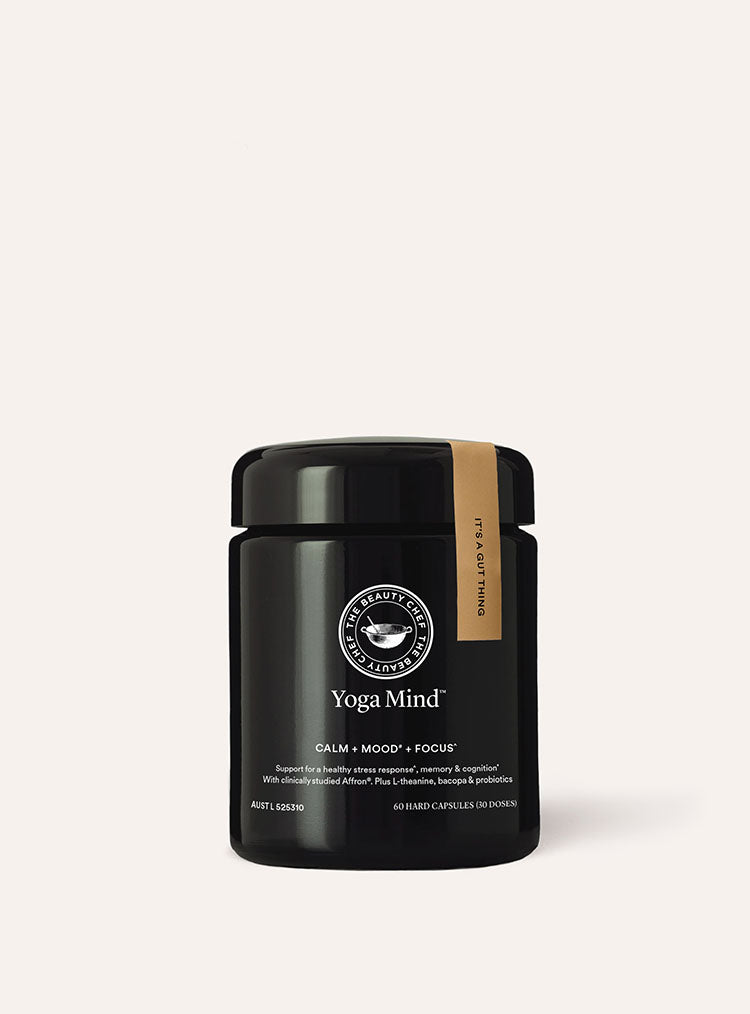
Yoga Mind™ was built to support a clear, steady mind the gut-led way. It brings together fermented L-theanine to help calm the mind and support a healthy stress response, Bacopa (traditionally used in Ayurvedic medicine to support memory and mental clarity), and clinically-studied affron® to support emotional wellbeing. These daily capsules have also been boosted with a targeted probiotic to support the gut that underpins it all. It is designed to be one supportive part of a bigger picture, alongside good sleep, movement and a nourishing diet.
The bottom line
Brain fog is common, usually temporary, and often a nudge to tend to the basics—sleep, stress, movement, nutrition and your gut. Start there, be patient with yourself, and if the fog lingers or affects your daily life, speak with your GP. Looking for gut-led support for a calmer, clearer mind? Discover Yoga Mind™.