

Unexpected bloating. Foods you've eaten your whole life suddenly don't agree with you. Digestion feels slower, more reactive, less predictable than it's ever been. If any of this sounds familiar—and you're in your late 30s or early 40s—it's not random, and it's not in your head.
Perimenopause directly impacts your gut health. Shifting and declining levels of oestrogen and progesterone slow digestion and alter the composition of your gut microbiome—and the effects ripple through your body in ways that go well beyond digestive discomfort.
Here's what's actually happening, how you can support your gut through this transition and where Peri Power™ fits into your daily routine.
How Perimenopause Changes Your Gut
Oestrogen and progesterone have receptors throughout the entire body—including the digestive tract. When they fluctuate and fall, the gut is affected in two specific ways: speed and balance.
Gut speed (motility)
Progesterone has a direct, physical effect on how quickly food moves through your digestive tract. When progesterone levels fall, gut motility slows. Food moves through more slowly—more time in the digestive system, more gas production, more perimenopause bloating and a higher likelihood of constipation. This is a physiological change, not a dietary one, and it's why what worked for your digestion before may not work quite as well now.
The microbiome
Oestrogen actively supports the diversity and health of your gut microbiome—the trillions of microorganisms living in your digestive system that govern everything from immune function to mood to nutrient absorption. Research published in Nutrients (2026) confirms that the gut microbiome is a critical modulator of systemic hormonal balance, with the relationship running in both directions.
As oestrogen fluctuates and declines, microbial diversity follows. Fewer beneficial bacteria, more opportunity for less helpful ones to take hold, and a gut environment that's less resilient and more reactive. But here's what matters most: a disrupted gut microbiome doesn't just cause digestion issues during perimenopause—it feeds back into your hormonal environment, potentially making symptoms worse. Each makes the other harder.
What Is the Estrobolome, and Why Does It Matter?
Once you understand that oestrogen shapes the gut, the next piece of the picture is how the gut shapes oestrogen. This is the gut-hormone connection at its most specific—and it centres on something called the estrobolome.
The estrobolome is the community of gut bacteria responsible for metabolising oestrogen. These microbes produce an enzyme called beta-glucuronidase, which determines how much processed oestrogen gets reactivated and recirculated in the body—and how much gets cleared out.
When the estrobolome is in balance, this system works efficiently. When the gut microbiome becomes disrupted, as it does during perimenopause, that balance breaks down—and the consequences can go in either direction:
- If too much oestrogen is being reabsorbed, symptoms like perimenopausal bloating, breast tenderness, heavier periods and mood swings can worsen.
- If oestrogen is being cleared too rapidly, symptoms like hot flushes, night sweats, vaginal dryness and brain fog may intensify.
Your gut microbiome is actively influencing how much oestrogen is circulating in your body at any given time—and oestrogen metabolism is just one part of that picture.
The Gut Connection Behind Symptoms You Didn’t Expect
Certain foods no longer agree with you
If you've noticed new reactions to wine, aged cheese, coffee or leftovers—flushing, hives, headaches, heart palpitations, a feeling of unease after eating—this may be connected to histamine.
Oestrogen and histamine have a bidirectional relationship: oestrogen can stimulate the release of histamine, and histamine can in turn stimulate oestrogen activity. Certain gut bacteria help break histamine down. When those bacteria are depleted, as they can be during perimenopause, histamine is no longer cleared efficiently, and tolerance for histamine-rich foods can drop noticeably.
Many foods naturally contain high levels of histamine: aged cheeses, wine, vinegar, processed meats and leftovers, among them. Perimenopause food sensitivities that feel hormonal or are attributed to stress may, in part, have their root in a gut that's lost the capacity to process histamine as effectively as it once did. This area of research is still developing, but it offers a meaningful framework for an experience many women describe and can't explain.
Anxiety and sleep feel worse than hormones alone can account for
Most people know that declining progesterone affects mood and sleep during perimenopause. What's less commonly understood is the mechanism—and why gut health makes it worse.
Progesterone has a calming effect on the nervous system because it supports GABA, the brain's primary inhibitory neurotransmitter, responsible for quiet, calm and sleep. As progesterone drops, so does GABA activity. That's one disruption.
The second: certain gut bacteria‚ particularly Lactobacillus and Bifidobacterium species, independently produce GABA. When gut dysbiosis reduces these bacterial populations, the body loses a second GABA source at exactly the time it needs it most.
Perimenopause anxiety and sleep disruption are rarely just a hormone story. For many women, the gut microbiome is compounding both.
6 Ways to Support Gut Health During Perimenopause
Your gut microbiome adapts to what you eat, how you sleep and how much stress you carry. During perimenopause, that adaptability is worth leaning into.
These are the most accessible, evidence-informed ways to support your microbiome through this transition.
1. Prioritise plant diversity
A diverse diet gives your gut microbiome a diverse menu to work with. Vegetables, fruit, legumes, whole grains, nuts, seeds, herbs and spices all provide different fibres and plant compounds that can be used by different microbes. Rather than focusing on one “hero” food, aim to eat a wide variety across the week. The goal isn't perfection. It's diversity, consistently.
2. Prioritise fibre—especially prebiotic fibre
Fibre is the primary food source for your gut bacteria, and most of us don't consume nearly enough. Soluble fibre from oats, chia seeds and cooked vegetables helps regulate digestion and bowel motility. Prebiotic fibre—from garlic, onion, leeks, legumes and green bananas— specifically feeds the beneficial bacteria involved in oestrogen metabolism and GABA production.
If you're looking for an easy way to increase your fibre intake, incorporate The Perfect Poo™ into your daily routine. With 7 grams and three types of fibre in every scoop, this comprehensive formula harnesses science-backed Solnul® to sweep and feed your gut—helping your gut flora flourish while supporting regular bowel movements & normal poo consistency.
3. Incorporate fermented foods
Fermented foods introduce live, beneficial bacteria that help diversify and repopulate the gut microbiome. Natural yoghurt, kefir, miso and fresh sauerkraut are good starting points — particularly if you've been experiencing perimenopause food sensitivities, as these tend to be lower in histamine than aged or long-fermented varieties. A small, consistent daily serve does more than large amounts occasionally.
4. Take stress seriously—it's not a soft recommendation
Chronic stress elevates cortisol, which directly disrupts the gut microbiome, increases intestinal permeability and drives systemic inflammation. During perimenopause, when the microbiome is already under hormonal pressure, stress becomes a compounding variable. Regular movement, breathwork, consistent sleep and genuine rest are gut health strategies — not indulgences.
5. Protect your sleep
Gut bacteria have their own circadian rhythms, and disrupted sleep disrupts the microbiome. Supporting sleep hygiene during perimenopause directly supports the gut, which in turn supports the hormonal environment that affects sleep. It's circular, and it starts with prioritising rest.
6. Limit alcohol, ultra-processed foods and unnecessary antibiotics
All three are significant drivers of microbial disruption. Alcohol in particular is worth reconsidering during this transition — it disrupts gut microbiome diversity, elevates histamine, exacerbates hot flushes and worsens sleep, compounding several of the mechanisms above at once.
What Are the Best Foods to Eat During Perimenopause?
During perimenopause, the foods that actively support gut microbiome diversity and reduce inflammation will have the most meaningful cumulative effect on how you feel.
Prioritise:
- Leafy greens and cruciferous vegetables (broccoli, kale, Brussels sprouts, cabbage)—fibre-rich and high in glucosinolates, which support the liver's role in oestrogen clearance
- Legumes (lentils, chickpeas, black beans)—excellent prebiotic fibre that feeds the estrobolome
- Ground flaxseed—rich in lignans, which have been studied for their role in supporting oestrogen metabolism
- Oily fish (salmon, sardines, mackerel)—omega-3 fatty acids ease gut inflammation and support the gut-brain axis
- Fermented foods—at least one serve daily, starting with lower-histamine options like kefir, natural yoghurt and miso if you've been reacting to foods
- Colourful fruits and vegetables—polyphenols in berries, pomegranate and red cabbage act as prebiotics, feeding the beneficial microbes that regulate oestrogen, histamine and GABA
- Wholegrains (oats, brown rice, quinoa)—soluble fibre to support bowel regularity and ease perimenopause constipation
The Bottom Line
Perimenopause changes your gut—directly, measurably and through multiple pathways at once. Shifting hormones slow digestion, alter the microbiome and disrupt the bacteria responsible for regulating oestrogen and GABA. The gut, in turn, influences how much oestrogen is circulating, how the nervous system responds and how resilient the body is to the transition overall.
The gut is not a bystander to perimenopause. In many ways, it's a key driver of how you experience it.
The good news? The microbiome responds. What you eat, how you sleep and how you manage stress all shift the gut environment—and through it, your hormonal experience of this life stage.
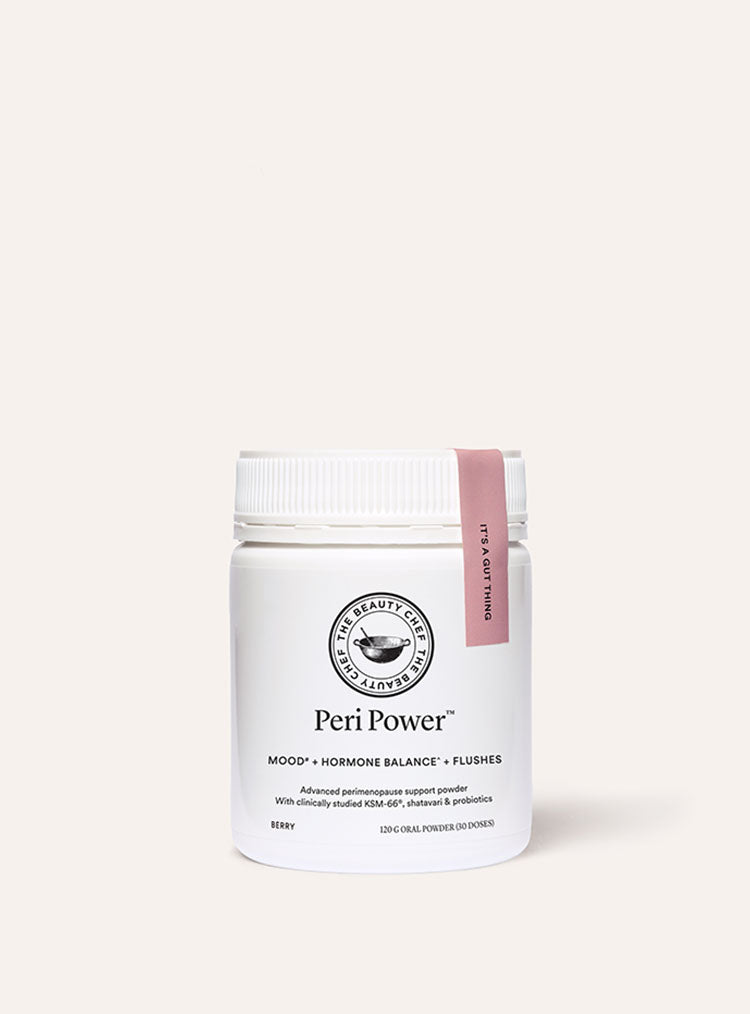
Supporting the gut–hormone connection with Peri Power™
We created Peri Power™ to support you through this next phase of life, offering targeted relief from some of the most commonly disruptive symptoms.
Its comprehensive formula combines clinically studied KSM-66® Ashwagandha, black cohosh, sage, vitex and shatavari to help with mood, stress resilience, healthy hormonal balance, hot flushes, excessive perspiration and night sweats. It also contains a targeted probiotic to support digestion, a healthy gut microbiome and immunity.
Two serves a day, in a delicious berry-flavoured blend, for targeted support through this new phase of life.